The Impacts of Light Pollution on Wildlife

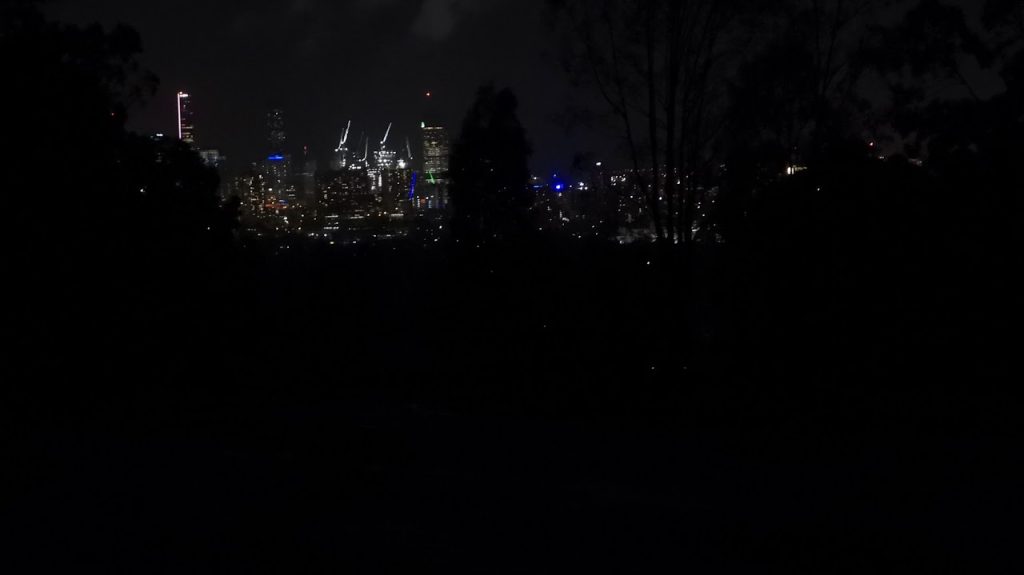
Evidence of the current absence of light pollution

(Photograph taken from above the proposed site looking towards the city)

Paul C. described the location and planned display at the Botanic Gardens, pointing out that it lies in an area between the Western Freeway and the quarry that is currently very dark at night, and offers a refuge for nocturnal animals that require dark conditions.

The black area in the foreground includes the proposed site of the Lumina project in the Botanic Gardens.

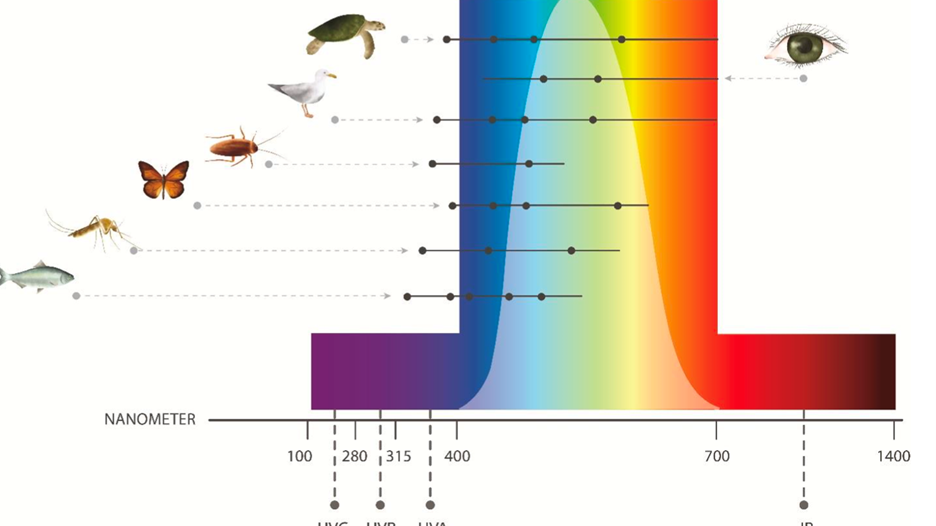
Sensitivity of different organisms to different light wavelengths

The image shows that relative to human vision, many organisms have much greater sensitivity to shorter wavelengths of light, concentrated towards the ‘blue’ end of the visible spectrum and into the ultraviolet (UVA) range.

Unfortunately for such species, LED lights have a strong peak in exactly this blue end of the spectrum, meaning that they may be especially susceptible to disturbance by LEDs while humans are much less aware of light at those wavelengths.

What's at stake?

What does the proposal entail?

  • Privatisation of at least 50 hectares of public land including Anzac Park, Toowong
  • Concept only Development Application
  • Not an Environmental Facility
  • Does not conform to the Mt Coot-tha Botanic Gardens Master Plan
  • Contrary to the purpose of a Botanic Garden
  • Undesirable impacts of light on nocturnal wildlife and plant groups
  • Noise from the shows, patrons and traffic until 11pm each night of operation
  • Traffic and parking negative impacts on the local area with up to 2,400 visitors each night
  • Theft of rare plants
  • Increased roadkill of native animals with increased traffic
  • Does not represent value for money and contribute to ‘Brisbane Vision 2023’
  • Roma Street Parklands or City Botanic Gardens more appropriate locations
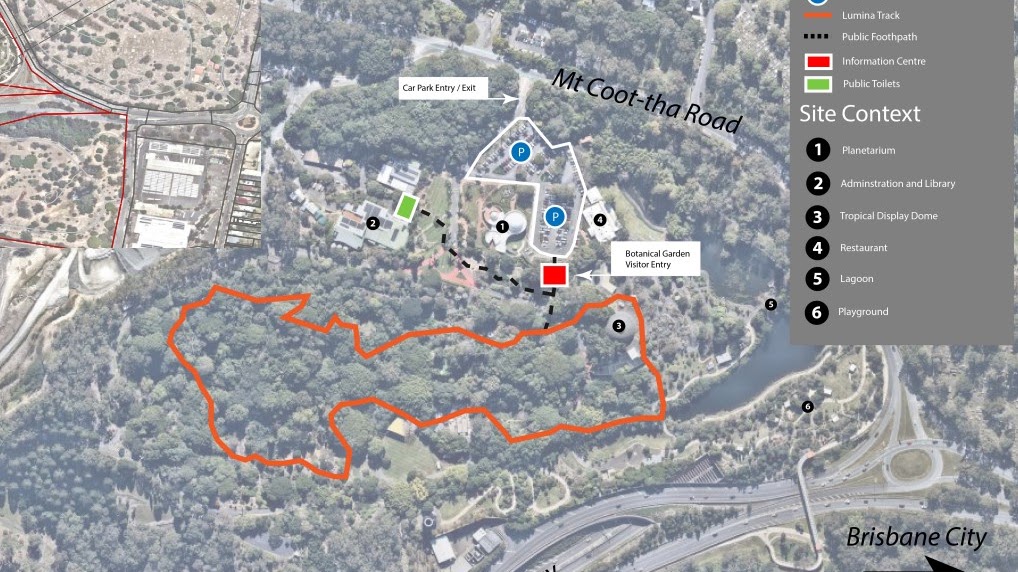
Map of Mt Coot-tha

Misinformation?

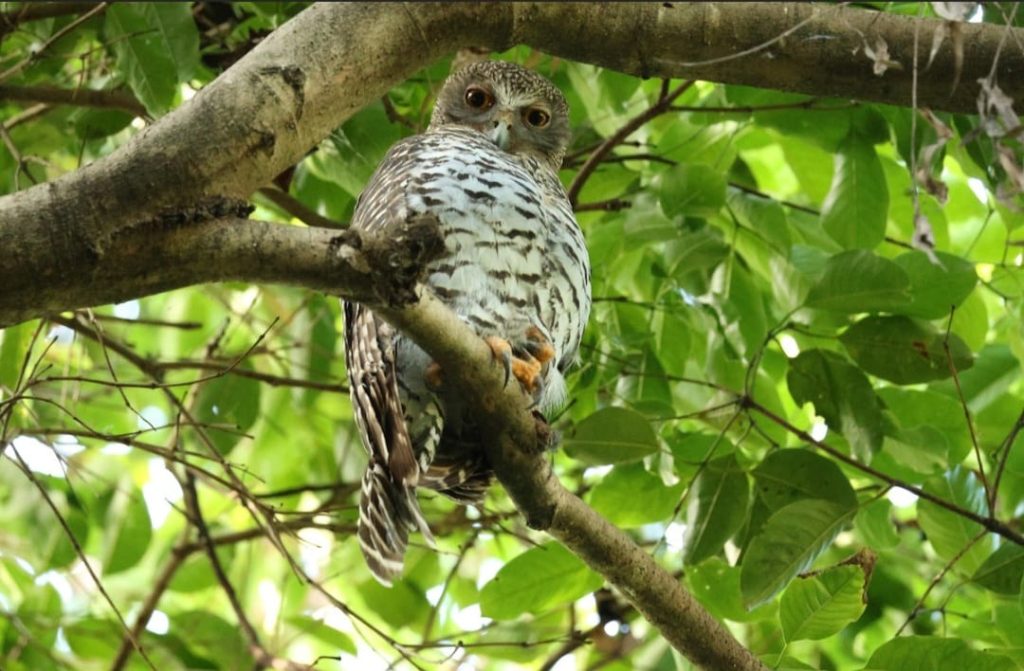
Ecology issues have not been addressed by the proponent. The impacts of light on microbats, owls and other nocturnal species could be significant. The proponent has not conducted any field surveys. The proponent acknowledged that the ecology report was from a “desk survey”.

The Lumina Night Walks proposal covers 8 sections of The Gardens, not just the Exotic Rainforest section as stated by Cr Krista Adams. The proposed “use area” is 4,512 m2 connected by a 1km long walking trail.

We do not want to see a re-run of the failed Zipline project that engaged in “tick the boxes” consultation and ended up costing Brisbane ratepayers dearly.

There is no detail on how the proponent concludes “minimal impacts on wildlife or surrounding residents”.


Artificial Light At Night (ALAN)

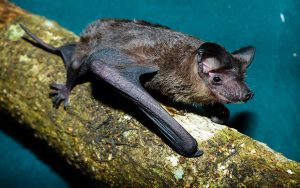
One of the submissions opposing the development application contained some very important information about microbats and the consequences of this proposed development. The consequences of which many of us are probably not aware.

“…the effect of Artificial Light At Night (ALAN) on already vulnerable microbat populations. Microbats have long been identified as key providers of ecosystem services, primarily due to their diet and foraging behaviour. They consume pathogen-carrying arthropods such as malariabearing mosquitos, pollinate and disperse seeds of culturally and economically important plant species, and suppress agricultural pest insects. Microbats provide enormous benefits to the economy and their role in the ecosystem is invaluable, yet they are often disregarded in development and planning initiatives. ALAN has only recently been discussed as a threat to biodiversity and the current literature suggests it has more negative than positive impacts on microbats. ALAN often attracts large numbers of insects that faster flying space-adapted species tend to exploit, though they are not always able to evade aerial predators that also use artificially lit areas as hunting grounds. Conversely, slower flying clutter-adapted species are more sensitive to artificially lit areas, indicating that responses are species-specific and conserving dark patches in urban areas is crucial for the persistence of microbat diversity. ALAN also disrupts microbat drinking behaviours and delays affected species’ emergence times from roosts, thus decreasing their foraging time and putting their health at risk”.

National Light Pollution Guidelines for Wildlife

Animals and humans perceive light differently. Commercial light monitoring instruments currently focus on measuring the region of the spectrum most visible to humans. It is important to recognise and account for this fact when monitoring light for wildlife impact assessment purposes. Commercial light modelling programs also focus on light most visible to humans and this should also be recognised and accounted for in the impact assessment of artificial light on wildlife.

The aim of the Guidelines is that artificial light will be managed so wildlife is:

  1. Not disrupted within, nor displaced from, important habitat; and
  2. Able to undertake critical behaviours such as foraging, reproduction and dispersal.
Helping wildlife through biodiversity sensitive lighting: The effects of light pollution on Australian wildlife

Biodiversity Council

Scroll to Top